The engineering foundations at Milton Keynes have undergone a tectonic shift on the eve of the 2026 regulatory reset. Red Bull Racing has confirmed the departure of Chief Designer Craig Skinner with immediate effect, bringing a definitive end to a storied 20-year tenure that spanned the team's entire championship-winning history. Skinner’s resignation, occurring on February 17, 2026, leaves a significant technical void as the team prepares for the final pre-season sessions in Bahrain.
The Architect of Dominance: From CFD Engineer to Chief Designer
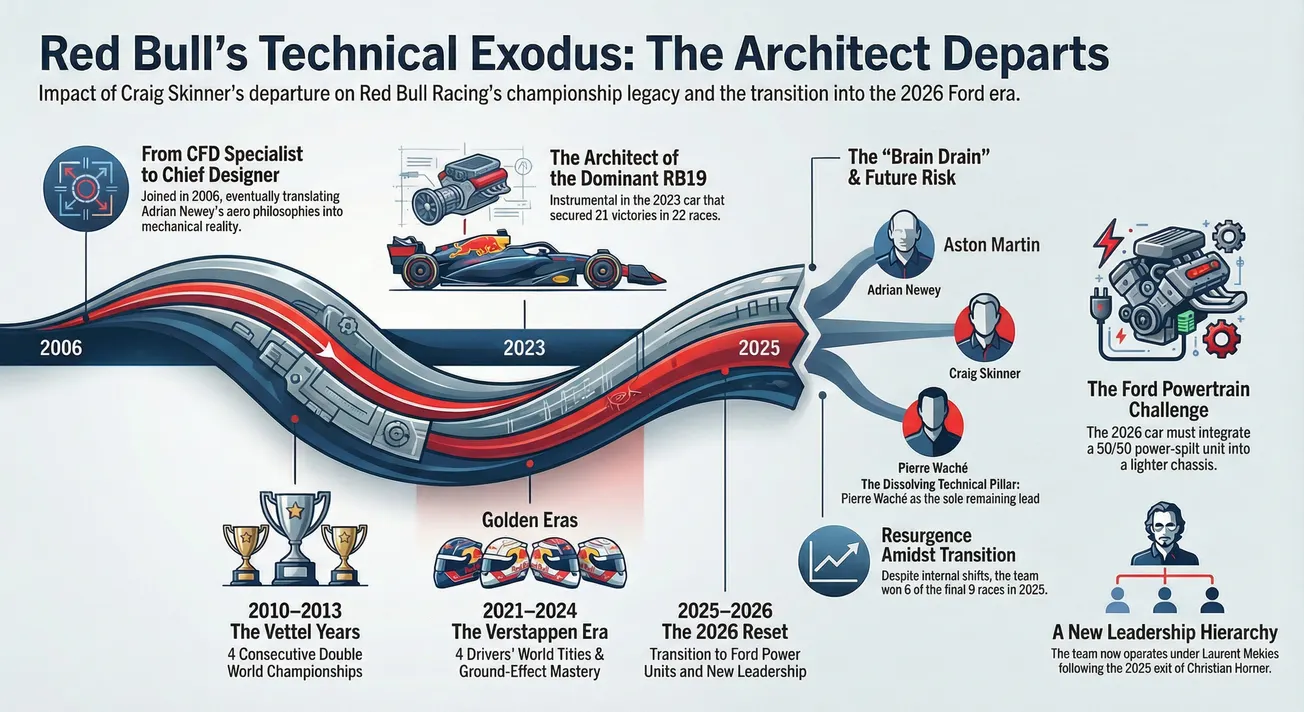
Skinner’s trajectory within Red Bull is a case study in technical evolution. Joining in 2006 from Williams and Jordan, he initially served as a CFD specialist before rising through the ranks to become Chief Designer in 2022.
While Adrian Newey—now at Aston Martin—provided the high-level aero philosophy, Skinner was the operative linchpin who translated those concepts into mechanical reality. He is widely recognized as a primary architect of the RB19, the most statistically dominant machine in Formula 1 history, which secured 21 out of 22 Grand Prix victories in 2023. His expertise in suspension geometry and chassis packaging was critical in mastering the ground-effect era that defined Max Verstappen’s four consecutive titles from 2021 to 2024.
Navigating the "Post-Horner" Era
Skinner’s exit is the latest in a series of high-profile departures that have reshaped the team’s leadership. Following the dismissal of Christian Horner in July 2025 and the subsequent retirement of Helmut Marko, the team is now operating under a restructured hierarchy led by Team Principal Laurent Mekies.
While the loss of institutional memory—including sporting director Jonathan Wheatley (Audi) and Will Courtenay (McLaren)—is undeniable, the team remains bullish. Under Mekies’ stewardship, Red Bull demonstrated significant development maturity late last season, enabling Verstappen to win six of the final nine races.
Technical Implications for the 2026 Ford Partnership
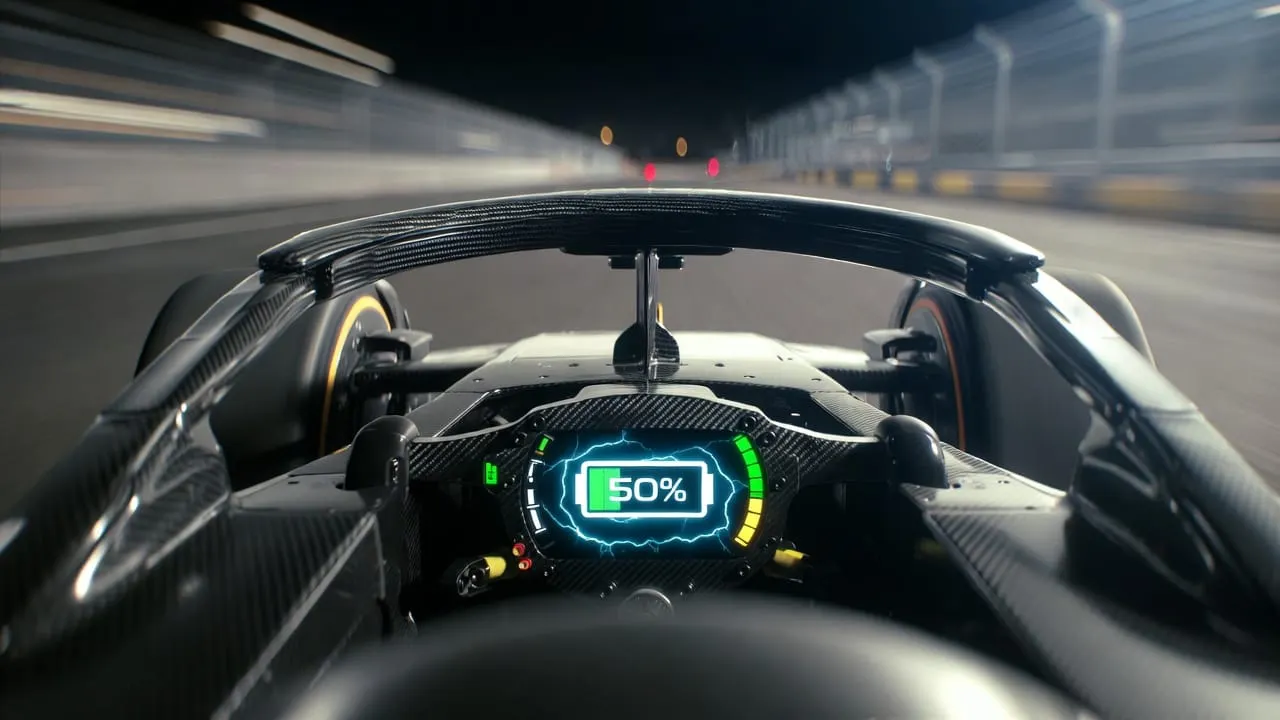
The timing of Skinner’s departure is particularly sensitive as the paddock transitions to the "Nimble Car" concept. The 2026 challenger requires a radical integration of the first-ever Red Bull-Ford Powertrains unit, which features a 50/50 power split between the ICE and electrical systems.
Key Technical Challenges for the Interim Design Team:
- Energy Management: Integrating the new MGU-K, which triples electrical output to 350kW, into a lighter 768kg chassis.
- Active Aerodynamics: Finalizing the actuator response times for the mandatory Straight Mode and Corner Mode wing configurations.
- Reliability: While the Ford PU has shown "impressive energy deployment" and reliability during the first Bahrain test (670 laps completed), the chassis must now evolve without its chief designer’s oversight.
The Paddock Verdict
Skinner is believed to have left of his own accord, and while his next destination is unconfirmed, his "race-hardened instincts" make him a top-tier target for the Audi or Ferrari projects. For Red Bull, the focus now shifts to an internal interim solution to cover his role during the upcoming second Bahrain test (February 18-20). As the sport enters its most complex technical era, the stability of the Mekies-Waché partnership will be the ultimate arbiter of whether Red Bull can maintain its "pinnacle" status without its founding engineering pillars.